Interview Your
Bacterial Genome
Upload assembled genomes and have a conversation with your bacteria. Real bioinformatics. No external APIs.
k-mer profiling • AMR detection • virulence markers • MLST typing • plasmid replicons
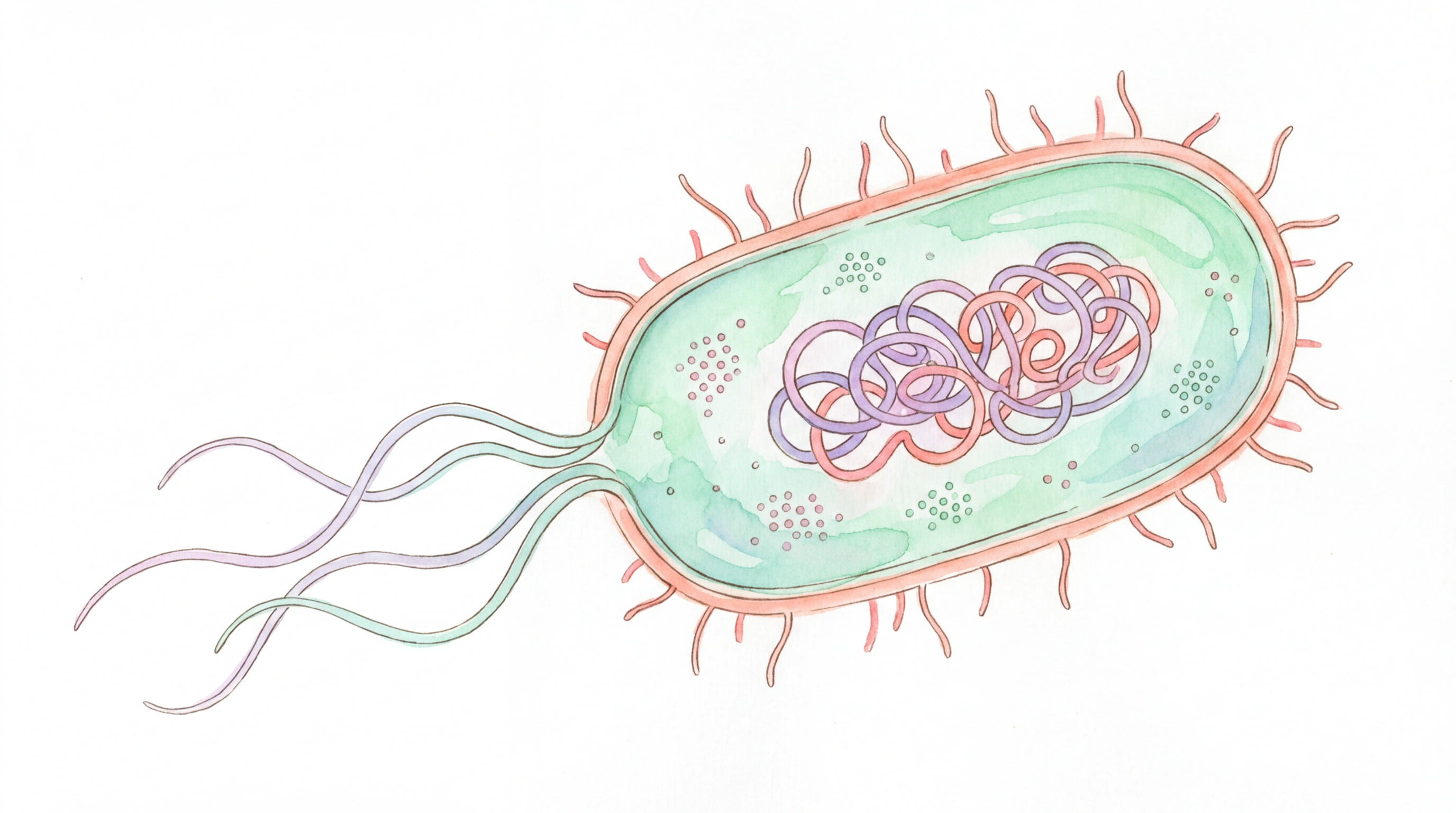
Comprehensive Characterization
Real bioinformatics, not simulations. Every result is traceable to validated methods and citations.
Organism ID
K-mer compositional profiling + GC/size matching. 8 ESKAPE+ Tier 1 priority pathogens.
Assembly Quality
N50/L50/N90, GC analysis, ORF prediction, quality scoring per QUAST standards.
AMR Detection
24+ resistance gene markers. Beta-lactamases, MRSA, VRE, carbapenemases, colistin resistance.
Virulence Factors
30+ virulence markers. Toxins, adhesins, invasion factors, immune evasion, biofilm genes.
MLST Typing
7 MLST schemes with 40+ known STs. Epidemiological context for each clone.
Plasmid Replicons
15+ replicon types. Conjugation assessment, transfer risk, associated resistance.
Tier 1 Priority Pathogens
WHO priority + ESKAPE pathogens — covering ~80% of hospital-acquired infections

E. coli
Escherichia coli
UTI, Sepsis, ESBL
K. pneumoniae
Klebsiella pneumoniae
CRE, hvKp
S. aureus
Staphylococcus aureus
MRSA
P. aeruginosa
Pseudomonas aeruginosa
MDR, CF
A. baumannii
Acinetobacter baumannii
XDR, ICU
E. faecium
Enterococcus faecium
VRE
S. enterica
Salmonella enterica
Typhoid, iNTS
M. tuberculosis
Mycobacterium tuberculosis
MDR-TB, XDR-TB
Meet the Pathogens
Detailed profiles of each Tier 1 priority pathogen in our detection database
 Gram-negativeWHO Critical
Leading cause of urinary tract infections (UTIs), neonatal meningitis, and Gram-negative bacteremia. Pathogenic strains include UPEC, ETEC, EHEC (O157:H7), EPEC, and EIEC. Extended-spectrum β-lactamase (ESBL) producing strains are a critical global AMR threat.
 Gram-negativeWHO Critical
Major cause of hospital-acquired pneumonia, UTIs, bloodstream infections, and liver abscesses (hypervirulent strains). Carbapenem-resistant K. pneumoniae (CRKP) is one of the most urgent AMR threats worldwide, with mortality rates exceeding 50% in some settings.
 Gram-positiveWHO High
Causes a wide spectrum from skin/soft-tissue infections to life-threatening endocarditis, osteomyelitis, pneumonia, and sepsis. Methicillin-resistant S. aureus (MRSA) is a global health crisis affecting both hospital (HA-MRSA) and community (CA-MRSA) settings.
 Gram-negativeWHO Critical
Major opportunistic pathogen in cystic fibrosis, severe burns, ICU infections, and ventilator-associated pneumonia. Notable for intrinsic multi-drug resistance due to efflux pumps and low outer membrane permeability. Carbapenem-resistant strains are a critical WHO priority.
 Gram-negativeWHO Critical
The quintessential nosocomial "superbug". Survives weeks on hospital surfaces. Causes ventilator-associated pneumonia, wound infections, and bloodstream infections in ICU patients. Pan-drug resistant (PDR) strains are increasingly reported, leaving few or no treatment options.
 Gram-positiveWHO High
Leading cause of vancomycin-resistant enterococcal (VRE) hospital infections. Causes UTIs, endocarditis, intra-abdominal infections, and bloodstream infections. Intrinsically resistant to many antibiotics and readily acquires resistance genes via mobile genetic elements.
 Gram-negativeWHO High
Major food-borne pathogen. Non-typhoidal Salmonella (Typhimurium, Enteritidis) causes gastroenteritis; Typhi/Paratyphi cause typhoid/paratyphoid fever. Invasive non-typhoidal Salmonella (iNTS) causes ~680,000 deaths/year in sub-Saharan Africa. Fluoroquinolone-resistant strains are increasing.
 Acid-fastWHO Critical
The world’s deadliest bacterial pathogen, causing ~1.3 million deaths/year. Causes pulmonary and extrapulmonary tuberculosis. MDR-TB (resistant to isoniazid + rifampicin) and XDR-TB are major threats. Treatment requires 6–9 months of multi-drug therapy. Unique waxy mycolic acid cell wall.
Validated Methodology
Same principles as established bioinformatics tools used in clinical and research labs worldwide.
Organism Identification
Method: Compositional analysis: GC content + genome size + tetranucleotide frequency signatures + diagnostic markers
Karlin & Burge (1995) Trends Genet; Ondov et al. (2016) Genome Biol
AMR Gene Detection
Method: Conserved diagnostic marker subsequence search on forward and reverse complement strands
Alcock et al. (2023) CARD; Bortolaia et al. (2020) ResFinder; Feldgarden et al. (2019) AMRFinderPlus
Virulence Factor Detection
Method: Curated VF marker sequence matching with category-based pathogenicity scoring
Liu et al. (2022) VFDB; Joensen et al. (2014) VirulenceFinder
MLST Typing
Method: Conserved primer-region marker detection for MLST loci + allelic profile matching
Jolley et al. (2018) PubMLST; Seemann T — mlst tool
Plasmid Detection
Method: Replicon marker sequence identification on assembled contigs
Carattoli et al. (2014) PlasmidFinder; Robertson & Nash (2018) MOB-suite
Scientific Disclaimer
GenoVox provides computational predictions based on genomic markers. Results are for research purposes. Phenotypic antimicrobial susceptibility testing (AST) is essential for clinical decision-making.
Ready to Interview Your Genome?
Upload your FASTA file and get scientifically-grounded characterization in seconds.